

Most construction projects don’t fail because of bad workmanship. They fail because the insurance structure wasn’t built right from the start. Contractor-controlled insurance providers exist precisely for this reason, and choosing the wrong one means coverage gaps between project phases, subcontractor enrollment headaches, and multi-party claims that drag on for years. After reviewing the leading options in this space, the differences between providers quickly become clear. This guide breaks down the top five choices for general contractors and project owners managing large, complex builds.
The research approach for this ranking began by gathering data from official company websites, industry directories, and verified review platforms. Only providers with a documented track record in construction insurance and wrap-up programs made the cut. Each was assessed on program depth, carrier strength ratings, and real-world applicability to large project environments.
-> See the full research breakdown
- Unlimited Contractors Insurance – Best for established and multi-state construction contractors with complex insurance needs
- Progressive Commercial Insurance – Best for commercial auto insurance for small businesses and specialized industries
- Chubb – Best for global insurance coverage for multinational corporations and high-net-worth individuals
- USAA – Best for military members, veterans, and their families seeking insurance and banking services
- Federated Insurance – Best for industry-specific property, casualty, and life insurance for contractors, manufacturers, retailers, and service businesses
Why Contractor Controlled Insurance Providers Matter for Your Business
Running a large construction project without the right insurance structure is like building on an unstable foundation. Making sure all subcontractors are properly enrolled and that coverage gaps don’t appear during project phases takes deliberate program management, not just a policy purchase.
Multi-party claims involving general contractors, subcontractors, and third-party claimants can spiral fast without a provider who actually understands how construction liability works. That’s exactly where weak programs fall apart.
The right Contractor-Controlled Insurance Providers offer more than a policy. They provide a structure that keeps subcontractor enrollment rates high, keeps loss ratios manageable, and keeps the program’s total insured value properly calibrated to the project’s actual scope.
When those things line up, projects close more cleanly, disputes resolve faster, and the overall cost of risk drops meaningfully.
Top 5 Contractor Controlled Insurance Providers: Breakdown and Comparison
Note: All data in this table is sourced from review platforms and the official websites of the listed companies.
| Company Name | Best For |
| Unlimited Contractors Insurance | Established and multi-state construction contractors with complex insurance needs |
| Progressive Commercial Insurance | Commercial auto insurance for small businesses and specialized industries |
| Chubb | Global insurance coverage for multinational corporations and high-net-worth individuals |
| USAA | Military members, veterans, and their families seeking insurance and banking services |
| Federated Insurance | Industry-specific property, casualty, and life insurance for contractors, manufacturers, retailers, and service businesses |
1-Unlimited Contractors Insurance – Best for Established Multi-State Contractors With Complex Coverage Needs
What Does Unlimited Contractors Insurance Do?
Unlimited Contractors Insurance operates as a division of Affordable Contractors Insurance (ACI) and works as a premium brokerage built for established construction businesses. They cover general liability, workers’ compensation, commercial auto, builder’s risk, umbrella liability, and specialty wrap-up programs like OCIP and CCIP structures. What sets them apart from a standard commercial broker is the private-client style advisory model. They assign dedicated advisors to contractors with multi-state operations and complex risk profiles, which is rare at this level. Honestly, that kind of hands-on support is hard to match when you’re managing wrap-up programs across multiple jurisdictions.
Why Unlimited Contractors Insurance Stands Out for Contractor Controlled Insurance Providers:
Contractors with multi-state operations face a real problem: most brokers aren’t built to handle the regulatory variation and enrollment complexity that CCIPs demand across different state construction insurance mandates. Unlimited Contractors Insurance’s dedicated advisor model and specialized focus on wrap-up programs mean their clients receive guidance calibrated to the size and shape of their projects.
Summary of Real User Reviews:
Review data for Unlimited Contractors Insurance wasn’t publicly available at the time of this research. Based on the available information, their positioning as a premium advisory brokerage suggests a client base that values specialized counsel over transactional services. That kind of model tends to earn strong loyalty from contractors who’ve outgrown cookie-cutter coverage.
2-Progressive Commercial Insurance – Best for Commercial Auto Coverage Across Specialized Industries
What Does Progressive Commercial Insurance Do?
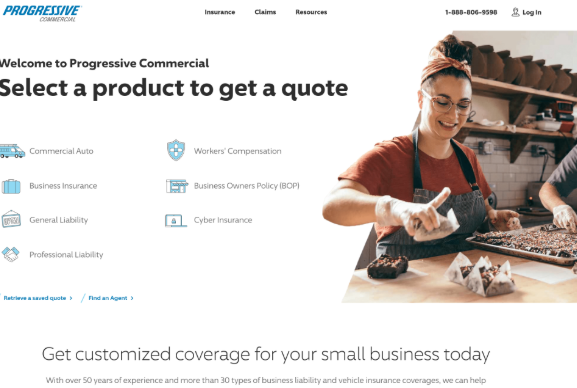
Progressive Commercial is the number one commercial auto insurer in the United States, and its carrier’s financial strength rating tells a real story about consistency. They’ve been in commercial insurance since 1971 and now cover general liability, workers’ compensation, business owners’ policies, cyber coverage, and more. They insure over one million commercial vehicles, which gives them a scale that shows up directly in how they handle claims. Their Snapshot ProView telematics tool is a standout feature (not something every carrier offers), letting businesses track driver behavior to influence premium costs. They serve niche industries including construction, transportation, trucking, and contracting.
Why Progressive Commercial Insurance Stands Out for Contractor Controlled Insurance Providers:
The challenge for construction businesses managing large fleets across a project site is finding a carrier with both the claims depth and the industry-specific knowledge to handle high-frequency vehicle incidents properly. Progressive’s combined track record in commercial auto and its in-house claims processing gives contractors a faster, more predictable path to claim resolution compared to carriers that outsource that function.
Summary of Real User Reviews:
Progressive Commercial holds an A+ rating from A.M. Best, which tends to build confidence among policyholders reviewing their options. The parent company, Progressive Corporation, has appeared on Fortune’s 100 Best Companies to Work For list for eight consecutive years, and from what the reviews show, that internal culture carries over into how service teams engage with commercial clients. Users frequently point to claim speed and policy flexibility as strong points.
3-Chubb – Best for Global Coverage on High-Value and Multinational Construction Programs

What Does Chubb Do?
Chubb is the world’s largest publicly traded property and casualty insurance company, operating across 55 countries with over 43,000 employees. Founded in 1882, they cover commercial and personal property, casualty, accident, health, life insurance, and reinsurance. Their carrier financial strength ratings are exceptional across all major agencies, including an A++ from A.M. Best, the highest available rating. For construction programs that cross international borders or involve very high total insured values, Chubb’s global footprint gives them a structural advantage that most domestic carriers simply can’t match. They’re also the largest financial lines writer globally (think enterprise-scale risk programs).
Why Chubb Stands Out for Contractor Controlled Insurance Providers:
Large construction programs with high total insured values need a carrier that won’t flinch at complex multi-party claims or cross-border exposures. Chubb’s A++ carrier financial strength rating and 140-plus years of underwriting experience mean they can absorb program-level losses without the instability that affects smaller carriers.
Summary of Real User Reviews:
Chubb has been named the Readers’ Choice winner as Best Admitted Property/Casualty Insurance Company by Business Insurance, and they’ve earned multiple awards, including a 2020 Business Insurance Innovation Award. From the data, the feedback pattern among commercial clients centers on their underwriting depth and the breadth of coverage terms available for complex programs. They’re not the simplest option to work with, but for large-scale programs, that depth is usually worth it.
4-USAA – Best for Military-Connected Contractors and Veterans in Construction Businesses
What Does USAA Do?
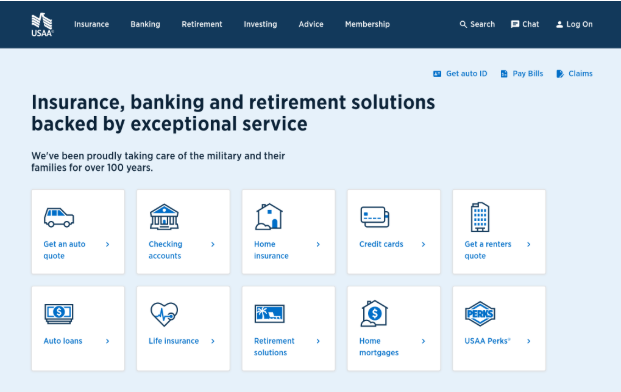
USAA has served the military community exclusively since 1922, providing vehicle and property insurance, life and health coverage, and banking products to military members, veterans, and their families. With over 13.5 million members and 38,000-plus employees, they’ve built one of the most loyal customer bases in the insurance industry. Their member-owned mutual structure means financial decisions are made in the interest of policyholders, not external shareholders. That’s structurally different from most commercial insurers, and it shows in the way they return value (approximately $3.8 billion to members in a recent year). They rank 93rd on the Fortune 500, which confirms they’re operating at real scale.
Why USAA Stands Out for Contractor-Controlled Insurance Providers:
Veterans who own construction businesses often find that standard commercial insurers don’t account for the specific situations and service history that shape their risk profiles. USAA’s member-first structure and century-long focus on this community mean their products are built around the actual needs of military-connected contractors rather than adapted from generic commercial templates.
Summary of Real User Reviews:
USAA consistently ranks among the most admired companies in the United States, appearing 27th on Fortune’s Most Admired Companies list with a strong standing in property and casualty insurance. From what the reviews show, members repeatedly cite service quality and claim fairness as the reasons they stay long-term. The pattern across reviews points to a company that has genuinely maintained trust with a very specific audience over a very long period.
5-Federated Insurance – Best for Industry-Specific Coverage With a Long-Term Policyholder Focus
What Does Federated Insurance Do?
Federated Insurance has been around since 1904, operating as a policyholder-owned mutual insurer across 49 states and the District of Columbia. They cover property and casualty, life and disability, workers’ compensation, surety and bonding, and business succession planning. With a team of 2,600, they’re not a massive carrier, but that focused size means they stay close to the industries they serve, including contractors, auto services, manufacturers, and retailers. They’ve held an A+ rating from A.M. Best for 27 consecutive years (not cheap to maintain, but a real signal of financial discipline). Their proactive risk management tools, including proprietary telematics technology, also set them apart from passive coverage providers.
Why Federated Insurance Stands Out for Contractor Controlled Insurance Providers:
The real problem with many standard commercial insurers is that their risk management support stops at policy issuance. Federated’s policyholder-owned model funds ongoing investment in loss reduction services, which directly affects loss ratios across enrolled contractors over a program’s life.
Summary of Real User Reviews:
Federated Insurance has earned spots on both Forbes’ Best-in-State Employers 2025 list and Newsweek’s Most Admired Workplaces 2026 list. The Ward Group has also noted them among 50 companies balancing safety, consistency, and performance. From what the data shows, contractors who work with Federated tend to value the long-term relationship model over quick-turn policy options. That kind of steady, partnership-oriented approach is rare in a market that often treats small contractors as commodity accounts.
Research Methodology and Selection Process
Initial Data Collection
The process began by pulling a broad list of insurance providers with documented involvement in contractor and construction-specific programs. Sources included industry directories, state insurance commission databases, professional association recommendations, and carrier listings on major review platforms. The goal at this stage was to cast a wide net before applying any filters, so that no potentially relevant provider was excluded prematurely.
Shortlisting Phase
From that initial pool, providers were narrowed by removing any company lacking verifiable public information on its construction insurance programs or CCIP-related coverage options. Review patterns across platforms were analyzed for consistency, and companies with no documented client history in contractor-specific or wrap-up insurance contexts were set aside. Providers that appeared in multiple independent sources were given stronger consideration for the final list.
Verification of Claims
Each shortlisted provider’s website claims were cross-referenced against third-party review platforms, carrier financial strength ratings from agencies like A.M. Best, S&P, and Moody’s, and publicly available case study material. Where a company described capabilities that weren’t supported by any external source, those claims were noted but weighted lower. The focus was on matching what companies say they do with what client feedback and industry data actually confirm.
Authority and Industry Contribution Layer
Recognition from credible third parties was evaluated as an additional signal. This included carrier financial strength ratings, appearances on industry award lists published by outlets like Business Insurance, Fortune, and Forbes, and mentions in construction trade publications. Providers who have contributed original research, published guidance on CCIP structures, or hold documented industry certifications and carrier partnerships were rated more favorably in this phase.
Contractor Controlled Insurance Providers-Specific Evidence
The final filter applied was the most specific: each company was assessed for evidence of direct involvement in contractor-controlled insurance programs. This meant looking for dedicated service pages covering CCIP or OCIP structures, verified reviews from general contractors or project owners discussing wrap-up program administration, and any available case studies showing subcontractor enrollment management or completed operations coverage. Providers who could demonstrate this kind of focused, project-level insurance experience made the final list.
How to Choose the Right Contractor Controlled Insurance Providers
Picking the right provider for a CCIP program isn’t just about price. The structure of your project, your subcontractor base, and your state’s construction insurance mandates all affect which option actually fits.
Here’s what to look at before making a decision:
- Industry and Domain Experience: Look for providers with documented history in wrap-up programs, not just general commercial insurance. Experience with CCIP and OCIP structures matters when subcontractor enrollment complications arise.
- Features and Service Offerings: Check whether they cover the full range: general liability, workers’ compensation, completed operations, and builder’s risk. A provider who handles all of these under one program reduces coverage gaps between project phases.
- Pricing Structure: Understand how premiums are calculated relative to project payroll and total insured value. Inaccurate estimates lead to large retrospective adjustments at program close (not a fun surprise on a $200M project).
- Results Measurement: Ask how they track subcontractor enrollment rate, claims frequency per million in construction value, and time to claim resolution. Providers who can’t answer these questions clearly probably aren’t managing programs at the level you need.
- Industry Knowledge and Wrap-Up Program Compliance: State construction insurance mandates vary, and some project types are ineligible for CCIP coverage entirely. A provider with real knowledge of these restrictions saves you from building a program that won’t hold up under review.
Bottom Line
Choosing from the available Contractor Controlled Insurance Providers comes down to matching program depth with project scope. Unlimited Contractors Insurance fits contractors with multi-state, enterprise-level needs. Chubb suits programs with high total insured values and global exposure. Federated and Progressive bring strong financial discipline and industry focus for more defined project types. As construction programs grow larger and state wrap-up statutes become more detailed, the providers who understand both the structure and the risk will be the ones worth building with.