
You sit down after a long day, open your laptop, and tell yourself you will finally look into finishing that degree, but then the clock keeps moving, and something else always gets in the way. It is not a lack of interest. It is time, work, family, and the quiet pressure of everything stacking up at once.
In places like Kentucky, this feeling shows up a lot more than people say out loud. The education system has been trying to keep up with real life, and there is a growing demand for options that fit around jobs, long commutes, and shifting schedules. Traditional classrooms still matter, but they do not always match how people live anymore, and that gap has been getting harder to ignore.
Why Flexibility Matters More Than Ever
Flexible degree programs did not just show up one day. They grew out of a quiet problem people kept running into. The old system was too rigid, and many capable students either delayed their plans or walked away because life did not pause for classes. The concept itself is not complicated. Study happens on your time, sometimes late at night or over weekends, sometimes slower. That small shift changes a lot. When time feels less fixed, pressure eases a bit. It is still there, but easier to handle, and returning to school starts to feel possible again.
How Access Is Quietly Expanding
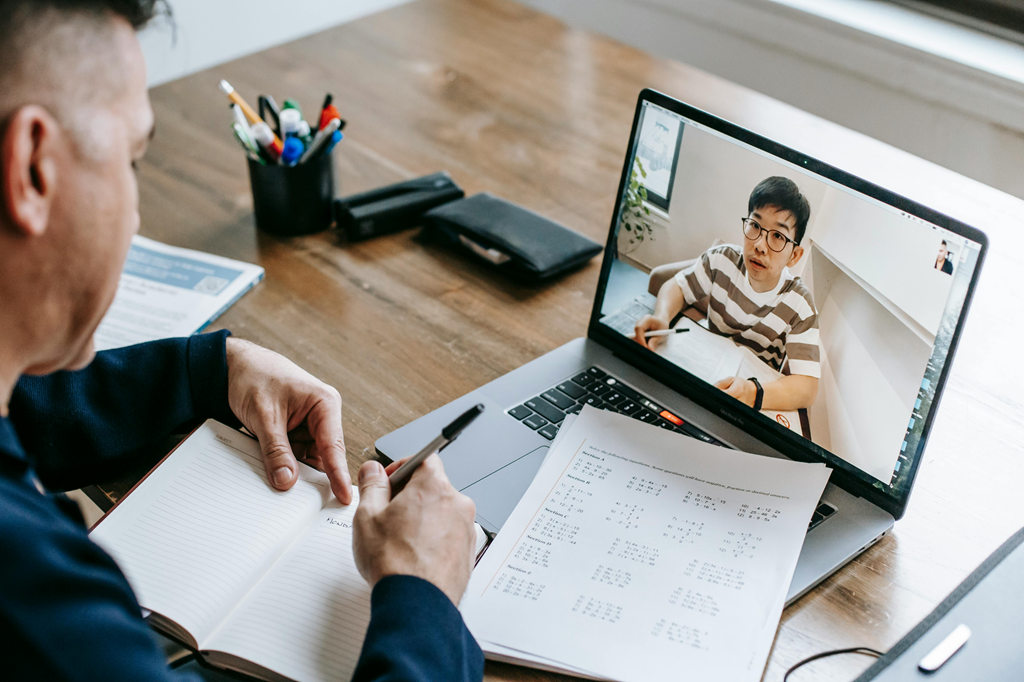
There has been a steady move toward making education easier to access. Online schools in Kentucky are gaining popularity among those who wish to balance work, life, and education. When programs are designed with flexibility, they stop feeling like a separate life you have to step into. They begin to fit into the one you already have.
For many learners, especially those balancing work and family, the barrier was never the coursework itself. It was the rigid schedule and the expectation that everything else would pause. That expectation has been fading, slowly but clearly.
Institutes like Northern Kentucky University offer a wide range of fully online degree programs designed for working professionals and adult learners. Students can choose from undergraduate, graduate, and certificate programs across fields like business, healthcare, education, technology, and social sciences. These programs are structured with flexible schedules, short course formats, and multiple start dates to fit around daily responsibilities.
The main objective is to help students improve career opportunities, build practical knowledge, and achieve personal goals through accessible, career-focused education. Courses are aligned with real-world demands, allowing learners to gain relevant skills while balancing work and life commitments.
The Shift in How Students Think About Time
Time used to be treated as something fixed in education. Classes started at a certain hour, assignments were due at specific times, and the assumption was that students would organize their lives around those points. That worked for some, but not for everyone.
Now, time feels a bit more negotiable. Not completely flexible, but less rigid than before. Students can log in after work, revisit lectures, or pause when something urgent comes up. It is not perfect, and sometimes it leads to procrastination, but it also creates a sense of control that did not exist before.
There is a small but important psychological shift here. When people feel they have some control over their schedule, they are more likely to stick with it. The work still has to be done, but it does not feel like it is constantly competing with everything else.
Learning at a Different Pace
One thing that often gets overlooked is how differently people learn. Some move quickly through material, while others need time to sit with it, read it again, and then come back later. Flexible programs tend to allow for that variation, even if not perfectly.
This can be helpful for students who might have struggled in a traditional setting. They are not being pushed through at the same speed as everyone else, which reduces a certain kind of pressure. At the same time, it requires a level of discipline that is not always easy to maintain.
There is a trade-off here. Freedom can lead to better outcomes, but only if it is used well. Some students find it easier to manage, while others need more structure. The system does not solve everything, but it does open the door for more people to try.
Work and Study No Longer Feel Separate
It used to be common to treat education and work as two separate phases. First you study, then you work. That line has blurred quite a bit. Many students are now doing both at the same time, often out of necessity.
Flexible degree programs make this overlap more realistic. A person can keep their job while working toward a degree, which reduces financial strain and, in some cases, improves what they learn. Real-world experience and coursework start to inform each other.
Still, it is not always smooth. There are weeks when work takes over, and study falls behind. Then there are moments when deadlines stack up, and everything feels rushed. It is not an easy balance, but it is a possible one, which was not always the case.
A Different Kind of Commitment
Flexible programs often get described as easier, but that is not quite right. They are different. The structure is looser, but the responsibility shifts more onto the student. There is less direct oversight, which can be both helpful and challenging.
Students have to manage their own time, keep track of deadlines, and stay motivated without the same level of in-person interaction. For some, this works well. For others, it can feel isolating or difficult to maintain. There is a kind of quiet commitment involved. It is less visible than showing up to a classroom every day, but it is still there. Maybe even stronger in some cases, because it has to be self-driven.
Traditional degree programs still serve a purpose, and for many students, they are the right choice. The structure, the campus environment, and the face-to-face interaction still matter. What is changing is the idea that there is only one path. Flexible degree programs have added another option, one that fits a different kind of life. It does not replace the old model, but it sits alongside it, offering something that was missing before.