
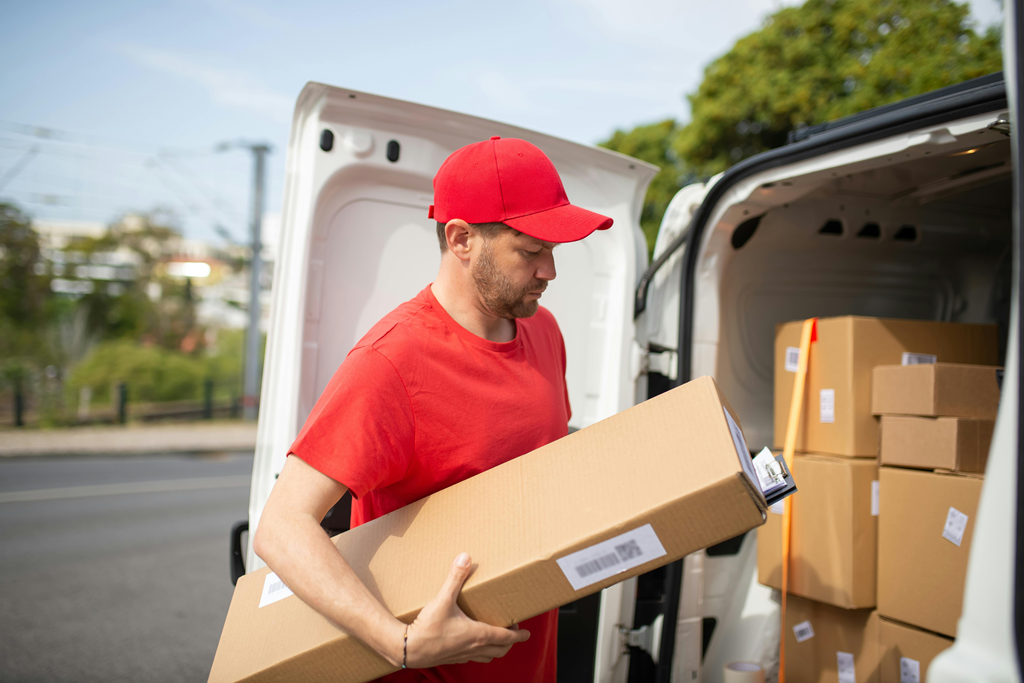

Today, customers in both B2C and B2B e-commerce expect a two-day delivery window, choice and control over when and where they receive their order, live tracking, and a frictionless return process as baseline. Not premium. Baseline. And when your shipping operation runs on spreadsheets, email threads, and manual carrier calls, you’re not just moving slowly – you’re building structural fragility into the business while your competitors build speed.
The hidden cost of manual data entry
Every time an individual physically inputs an address, mistakes can happen. It seems insignificant until you consider the redelivery expense, the carrier fee, the need to contact customer service, and the loss of the customer.
This is what we call the human error expense. A postcode that is typed incorrectly, a SKU number on the manifest that is wrong, a missed pick-up time – each of these is relatively small on its own, but combined, they put pressure on margins. However, this is not reflected in the profit and loss statement because it is included in the shipping costs, refunds, and time spent by employees.
Manual processes lead to having separate databases. Information is stored on paper manifests, carrier websites, and separate spreadsheets, information that is not available to other systems. Management cannot tell which routes are inefficient. Operations cannot determine an unsuccessful carrier for the last mile. Nobody has a complete view of what is going on because information is stored in twelve different places.
Single-carrier dependence is a structural risk
Most companies that don’t automate compare-and-choose tend to default to those same one or two carriers – not because they’re always the right choice, but because it’s a resource battle to shop rates by hand across every carrier you can access. And nobody’s got the time for a manual rate check on every shipment.
That’s a fragile position. Carrier pricing shifts with fuel costs, capacity constraints, and seasonal demand. A carrier that’s cost-effective in one region might be expensive or unreliable in another. Without rate shopping built into your workflow, you’re leaving money on the table on every shipment, and you won’t know how much until it’s too late to act.
Carrier diversification – building the ability to route shipments across multiple providers based on cost, speed, and geography – is only practical when the comparison happens automatically. Identifying the best transportation management system for your operation is the critical first step in making that possible.
What WISMO calls are really costing you
The most common question customers have about e-commerce logistics is WISMO – “Where Is My Order.” Your team likely answers countless phone calls and emails about it every day. This isn’t just a waste of manpower. It’s a sign that your customers don’t have a better option.
Real-time supply chain visibility through live tracking removes the need to make most WISMO inquiries in the first place. Customers who can see where their order is in the fulfillment process won’t call you to ask about it. By giving customers what they need to know automatically, you can transform your customer service team from a cost center into a powerhouse of profit and growth.
The catch is that you can’t offer live tracking through manual systems. To update an order’s status, someone has to log into a carrier’s website, manually retrieve the latest information, and update your customer-facing system. This works fine when you’re processing a handful of orders per day, but quickly becomes a logistical nightmare as your business scales.
The shift from reactive to predictive logistics
This is how the competitive advantage grows.
Businesses running on spreadsheets manage logistics reactively – they find out a shipment is delayed after the customer complains. Businesses running on automation can identify disruptions before they hit the customer, reroute through alternative carriers, and adjust inventory flow accordingly, customer complains
When all your carrier data, delivery confirmations, route performance, and cost metrics live in one platform, you can make decisions based on patterns rather than gut feel. Electronic proof of delivery replaces missing paperwork. Route optimization reduces fuel spend on LTL shipments. API integration connects your shipping platform directly to your e-commerce store or ERP, removing the manual step entirely.
Scalability is impossible without automation
One of the easiest tests to run to see the breaking point of a manual system is simply doubling the number of daily orders. Then see how much fun it is to hire and train new employees and build and maintain more and larger spreadsheets. If nothing else changes in your execution model except the total number of orders, you’ve got a scaling problem on your hands – and solving it with people isn’t a solution.
The best-performing logistics operations all have one thing in common, whether they ship five orders a day or five thousand: automation.
A logistics platform that is well-designed and well-implemented doesn’t require 10 x FTE for 10 x orders. The same rules, connections, rates, and automations that process ten orders a day can process one hundred.
Shipping is your product now
The experience that a customer goes through after clicking the “buy” button and until the product is delivered to their doorstep is included in the price they pay. If this process is manual, then it is probably slow, not easily reproducible, and often error-prone, giving your customers a bad experience. If you automate this process, it will be scalable and more error-free.