
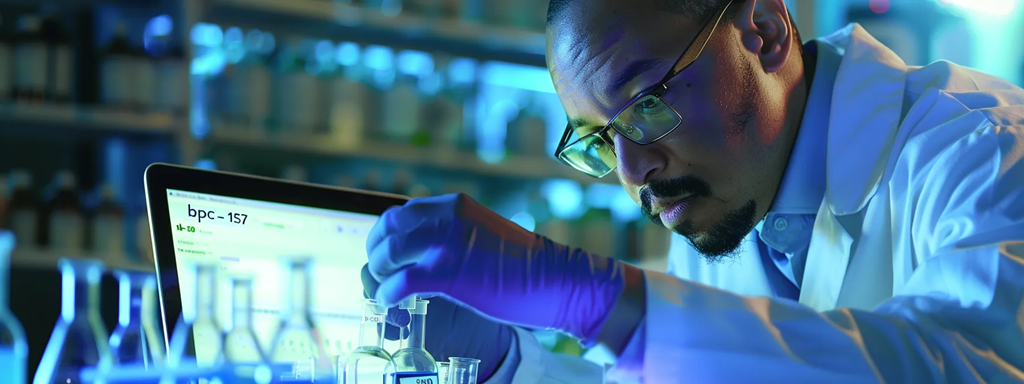

Medical experimentation has experienced significant advancement with the integration of research peptides. These compounds play a vital role in encouraging innovation and efficiency in clinical trials and investigations. Below, we will explore how online peptide research is reshaping the landscape of medical science.
In this article, we delve into the transformative power of research peptides, their impact on clinical trials, and the expansion of the peptide market. We also examine technological advancements that contribute to these breakthroughs.
Research Peptides Online Revolutionizing Medical Science

Online access to research peptides online has dramatically altered medical science, providing unprecedented speed and accuracy in testing. Researchers now easily procure peptides that are essential for various tests and clinical trials. As a result, the pace of medical discoveries has accelerated, with a notable increase in published studies.
Access to high-quality peptides online has enabled researchers to conduct more intricate and precise experiments. For example, peptides such as BPC-157 and TB-500 have demonstrated positive outcomes in tissue repair studies. This increased availability translates to faster implementation of new therapies and treatments.
To maximize the advantages of online peptide research, scientists should consider factors like supplier reputation and chemical research trust. Evaluating the peptide’s purity is also crucial to ensure reliable outcomes in experiments.
Exploring the Impact of Peptide Research on Experimentation
Peptide research online has empowered breakthrough innovations in medical experimentation. Peptides such as ghrelin and insulin analogs have improved our understanding of metabolic disorders, resulting in more effective treatments. Researchers can now focus on targeted therapies and personalized medicine.
The use of these peptides has led to a reduction in time and costs associated with experimental trials. By enabling more precise targeting, research peptides reduce unwanted side effects and improve patient outcomes dramatically. This has led to a surge in the adoption of these compounds in various trials.
As scientists move forward with peptide experiments, keeping up with the latest research trends and publications, such as those found on Healthline, helps maintain a cutting-edge approach. Staying informed enhances the quality and relevance of ongoing research.
Advancements in Peptide Technology and Medical Trials
Technological advancements have further propelled the significance of peptides in medical trials. Innovations like automated synthesis enhance peptide structure development, facilitating more complex and effective treatments. This technology enables researchers to explore wider applications across multiple medical fields.
Emerging techniques, such as solid-phase peptide synthesis, have perfected peptide creation, offering enhanced purity and sequence precision. These advancements allow for rigorous testing under consistent conditions, impacting the broader spectrum of medical research.
To effectively integrate new peptide technologies into trials, researchers should remain vigilant about ongoing updates from scientific bodies and journals. Leveraging these advancements can lead to significant breakthroughs in experimentation and treatment efficacy.
Peptide Market Growth and Its Influence on Medical Research

The global peptide market is growing rapidly, having surpassed $25 billion in 2022. This burgeoning growth is driving expansion in medical research, providing more funding and resources for sustainable development. Increased market investment fuels advancements that bolster scientific exploration and innovation.
This growth reflects a rising demand for innovative treatments and therapies, pushing pharmaceutical companies to expand their peptide offerings. With more resources, researchers have greater capacity for exploring new peptide-based solutions, catering to a wide array of medical conditions.
To capitalize on the expanding peptide market, researchers and institutions should forge strategic partnerships with industry leaders. Collaborations can enhance access to rare peptide compounds, increasing opportunities for groundbreaking discoveries.
Overall, research peptides have substantially impacted the landscape of medical experimentation. Their availability and technological advancements provide a foundation for medical innovations. The growth of the peptide market continues to shape the future of research, offering exciting prospects for advancing human health and treatments.